
Custom work · tarpaulins and shade cloths, NL and DE
From 2,215 separate product pages to about 250 families.
Afdekzeilwinkel sells tarpaulins and shade cloths in dozens of sizes and colors, in a Dutch and a German store. We built a PIM that does more than store content: it speeds up the work.
- Items
- 2,215
- Families detected
- 259
- Stores
- NL (Lightspeed) and DE (Shopify)
- To the German store
- 356 products
The problem
Nearly the same text, sixty times over.
Picqer held the items, Lightspeed the Dutch store and Shopify the German one. Every product had its own texts for each store, even when it only differed in size or color.
Titles in Picqer and Lightspeed sometimes contradicted each other, and 356 products were not yet in the German store.
Families
Write once, right 51 times.
The system reads every title and proposes families. PE Standard tarp in 51 sizes and colors becomes one page to manage.
The template fills in the size and color for each item, so every item keeps its own page in the store. Managed together, published separately.
Product knowledge
Product knowledge with a source.
What a product is, how long it lasts, how you fasten it and what it isn't for: captured in eight fixed topics.
The AI proposes facts from the existing store text, and every proposal carries a verbatim quote. What can't be backed up doesn't go in.
AI assistant
Tell the assistant.
A fact about the product becomes product knowledge. An instruction about writing becomes a rule, and you see what that rule does first.
Text proposals arrive as cards: accept, reject or edit. The AI can never publish by itself.
German for Shopify
The German store keeps up automatically.
Translated into German field by field, in the store's own voice and with fixed terms. The Shopify store's filters and product fields are filled correctly straight away.
When the Dutch text changes, the team sees exactly which German field needs redoing.
Safe publishing
So nothing goes wrong.
Checks before you look
Forbidden phrases, numbers without a source and broken variables are caught before a text reaches the team.
See first, then publish
For each item, you see exactly what goes to the store. Publishing everything at once is deliberately not possible.
You can always go back
Before overwriting, the system takes a snapshot of what was live.
Where we are now
Roadmap
In use by the team. The rollout is under way, family by family.
- July 2026
Dutch to German
The first version: the products from both stores in one place, and translation into German for the Shopify store.
One place for both stores.
- August 2026
The PIM
Families, templates per channel and the publishing engine, built the way the team wanted.
Managing by family instead of by item.
- September 2026
Product knowledge and assistant
Knowledge with a source, the assistant on every product page and publishing to both stores.
In use by the team.
- Now
Rollout
Families are being bundled and filled. The first publications to the stores are ready.
Next: live, family by family.
Sound familiar?
How many of your product texts are actually almost the same?
Many online stores manage every size and color as a separate product. Book an intro call and hear in 30 minutes where your time goes, and what we can build for it.
More cases
Read on.
%20--%3e%3csvg%20version='1.1'%20id='Laag_1'%20xmlns='http://www.w3.org/2000/svg'%20xmlns:xlink='http://www.w3.org/1999/xlink'%20x='0px'%20y='0px'%20viewBox='0%200%2085.04%2028.35'%20style='enable-background:new%200%200%2085.04%2028.35;'%20xml:space='preserve'%3e%3cstyle%20type='text/css'%3e%20.st0{fill:%23171816;}%20%3c/style%3e%3cg%3e%3cpolygon%20class='st0'%20points='6,7.07%206,10.09%206,13.1%206,16.12%206,19.14%206,22.16%209.02,22.16%2016.57,22.16%2016.57,19.14%209.02,19.14%209.02,16.12%2015.06,16.12%2015.06,13.1%209.02,13.1%209.02,10.09%2016.57,10.09%2016.57,7.07%209.02,7.07%20'/%3e%3cpolygon%20class='st0'%20points='31.66,7.07%2027.13,7.07%2027.13,10.09%2031.66,10.09%2031.66,22.16%2034.67,22.16%2034.67,10.09%2039.2,10.09%2039.2,7.07%2034.67,7.07%20'/%3e%3crect%20x='75.42'%20y='19.14'%20class='st0'%20width='3.02'%20height='3.02'/%3e%3cpath%20class='st0'%20d='M57.31,7.07c-4.17,0-7.55,3.38-7.55,7.55c0,4.17,3.38,7.55,7.55,7.55c1.54,0,2.97-0.46,4.16-1.25l1.25,1.25%20l2.13-2.13l-1.25-1.25c0.79-1.19,1.25-2.62,1.25-4.16C64.86,10.45,61.48,7.07,57.31,7.07z%20M57.31,19.14c-2.5,0-4.53-2.03-4.53-4.53%20s2.03-4.53,4.53-4.53s4.53,2.03,4.53,4.53c0,0.7-0.16,1.36-0.44,1.95l-1.95-1.95l-2.13,2.13l1.95,1.95%20C58.67,18.98,58.01,19.14,57.31,19.14z'/%3e%3c/g%3e%3c/svg%3e)
Own brand · Shopify Plus · 12 languages
~€105
to translate the whole store
The complete store in 12 languages, in its own voice.
Products, collections, pages and FAQ. Translating a product takes 30 seconds instead of 15 minutes. No agency, no freelancers.

“It used to take weeks to launch a product because we were waiting for translations. Now that happens in a morning.”
Arjan Spakman · ETQ Amsterdam - Content & translation
Custom · yacht charter, Aruba
7 weeks
from the start of the build to running on live data
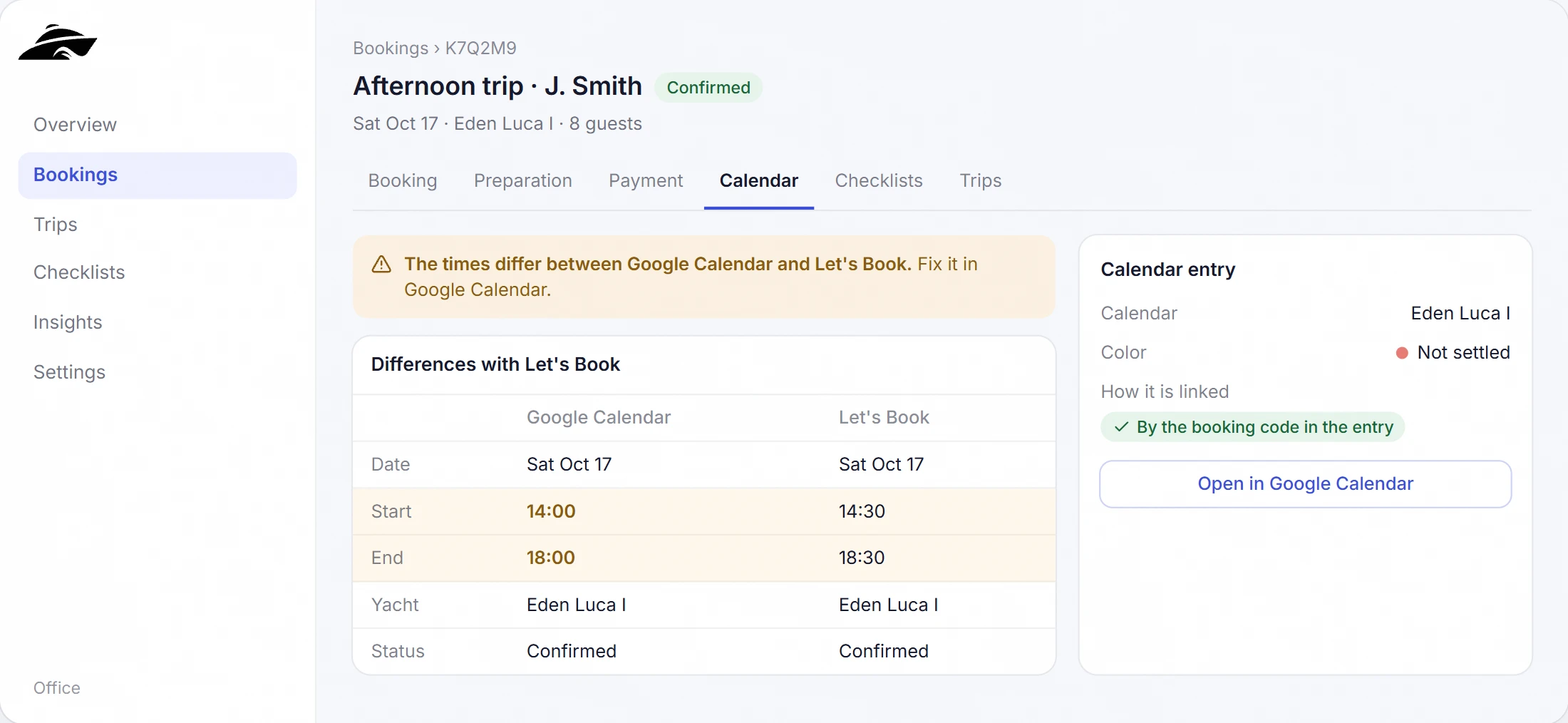
Booking, calendar and money side by side.
Let's Book, Google Calendar and the boats' GPS in one place, for the office, the captain and the crew. Differences stand out right away, and the crew runs checklists on the phone.